Redefining Sales and Marketing in Hospitality: Insights from the HSMAI MEA Executive Roundtable
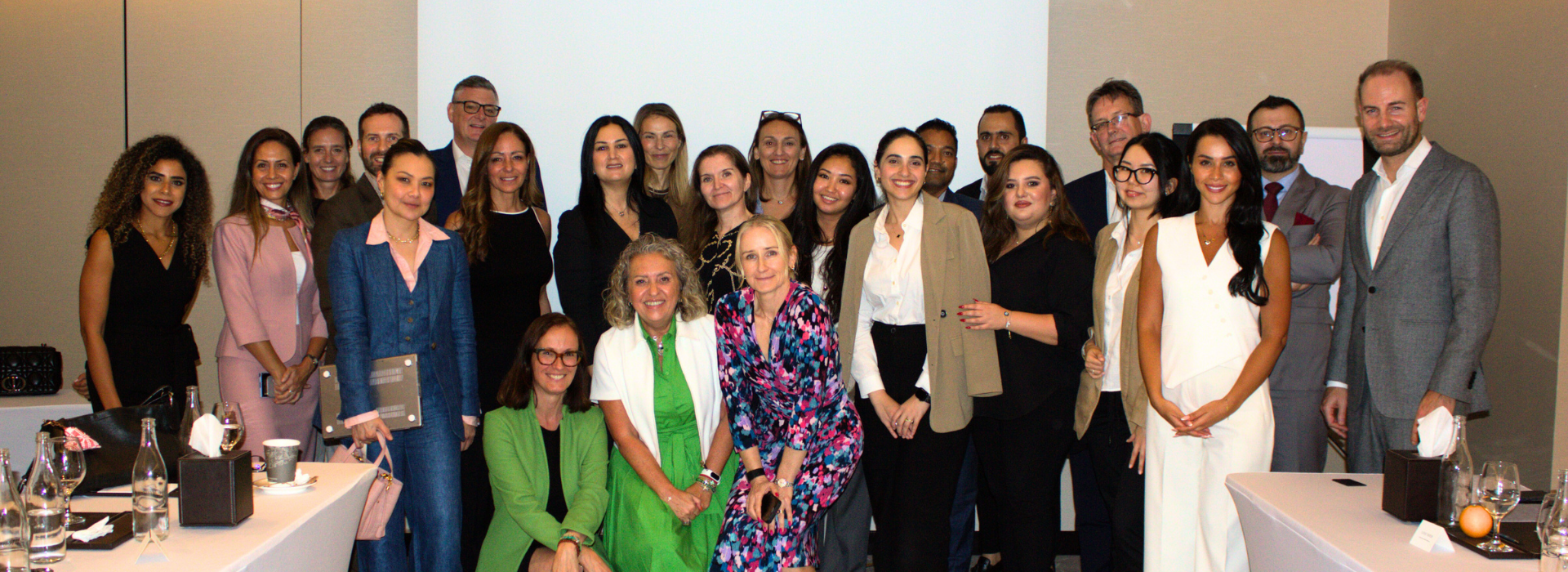
The hospitality industry is in a constant state of transformation, shaped by evolving guest expectations, competitive landscapes, and disruptive technologies. This September, HSMAI Middle East & Africa’s Executive Roundtable on Sales and Marketing, sales and marketing leaders, HSMAI Marketing Mastermind mentees, and commercial executives came together to explore three central themes: the integration of sales and marketing (“Smarketing”), the future of talent, and the role of AI in sales and marketing. Hosted at Fairmont Dubai, the session was moderated by Dr. Ivana Nobilo, Executive Academic Dean of Les Roches in Switzerland.
Smarketing – no more silos
The first theme centered on the idea of ‘Smarketing,’ the fusion of sales and marketing into a fully aligned force to ensure hotels can deliver a differentiated guest experience that goes beyond product.
When it comes to sales and marketing organizations, there is no one-size-fits-all model. Hotel sales and marketing structures vary widely depending on a property’s needs and leadership. Smaller hotels may combine roles, often led by sales-driven leaders, while larger operations see more nuanced distinctions with dedicated teams for both disciplines.
One thing is very clear, the roles of both marketing and sales leaders are evolving with a strong focus on embracing the power of digital platforms and increasingly commercial oriented with a stronger focus on ROI.
Tensions and opportunities remain. Sales continues to be often perceived as short-term and results-driven, while marketing is still too often seen as a cost rather than an investment playing the long game focused on brand building and reputation. The consensus from the discussion was that both functions must move away from legacy silos to co-create success. To change this we need to change the organizational mindset and leaders must redefine roles and responsibilities and empower marketing voices at the leadership table. As one participant succinctly put it: “There is no sales versus marketing; it is sales with marketing.”
Talent – the next growth barrier
Talent dominated the second discussion, with CEOs globally citing workforce shortages as a critical growth barrier. For hospitality, attracting and retaining sales and marketing talent is particularly acute.
One of the challenges discussed is the rise of the gig culture and the flexibility that in particular the younger generation entering the workforce is looking for. Flexibility and remote work, higher pay in other industries, and clearer career pathways elsewhere make hospitality less attractive to young talent.
Although some commercial disciplines, like revenue management, have successfully paved a clear path to executive influence, sales and marketing teams often still struggle to present compelling long-term career trajectories.
Participants highlighted the need for both vertical training (deepening expertise within a function) and horizontal exposure (broadening across disciplines like sales, marketing, and revenue) to successfully upskill for growth. Too often, career pathways stop at departmental silos with limited movement and advancement across disciplines.
Another challenge, especially from a Gen Z perspectives is the reputation of hospitality as an industry, which is often perceived as more traditional and less innovative and dynamic than for example retail. Lack of flexibility and limited structured learning opportunities risk alienating the very talent needed to future-proof the sector.
The message was clear: hospitality must reinvent its employer value proposition, not only by offering training but by fostering environments where career growth and flexibility are real.
Technology – AI’s promise and pitfalls
The third theme spotlighted the role of technology—particularly AI—in reshaping hospitality sales and marketing.
Discussing current applications of AI, participants noted the use of generative AI for research, ideation, copywriting, creative campaign support, video and audio generation, and workflow efficiencies in hotel sales and marketing departments. In addition, some teams have begun experimenting with agentic AI that could transform customer journeys and personalisation. The challenge remains adoption and governance around the use new and emerging technologies. As an industry, hospitality is not a fast adopter of new technology with legacy systems and fragmented ownership structures often slowing progress. Participants agreed that without governance and strategy, hotels risk missing opportunities or misusing tools.
Interesting to note is that participants don’t just see AI as a tool for efficiency, but as an opportunity to reshape competitive advantage. As one participant emphasized, marketeers need to “own their narrative” and define their role in this new landscape. Looking at the limits of AI, participants agreed that empathy and emotional intelligence remain uniquely human strengths. Hospitality’s essence lies in human connection, which AI cannot replace, at least yet.
Key Takeaways
- Integration is essential: Sales and marketing must align not just structurally but strategically to co-create guest experiences and drive results.
- Talent is the next battlefield: without addressing flexibility, growth pathways, and training, hospitality risks losing its next generation of leaders.
- Technology must be embraced with purpose: AI can enhance creativity and efficiency but must be balanced with human empathy and governed thoughtfully.
The future of hospitality belongs to organizations that integrate sales and marketing, reinvent their talent story, and embrace technology with purpose.